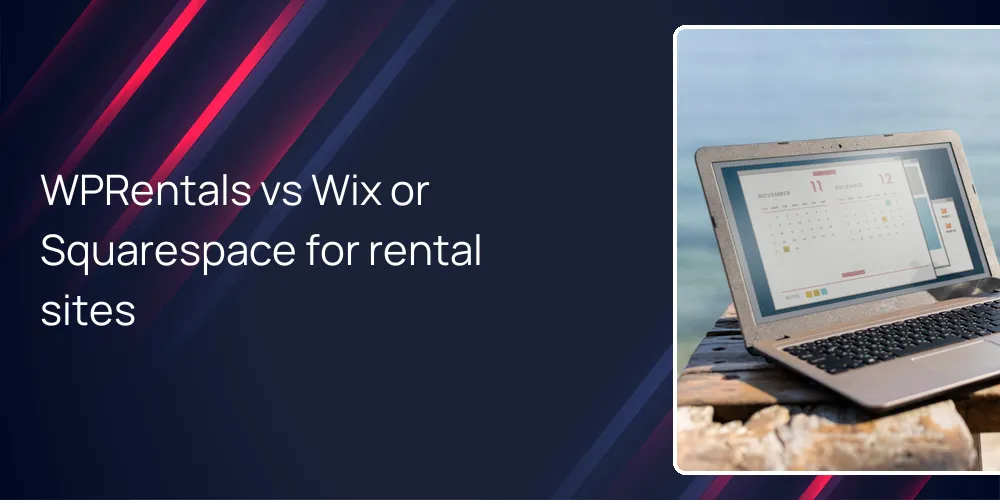
You should pick a website builder if you only need a simple brochure site. Use a WordPress rental theme with WPRentals if you care about long term control, lower software costs as you grow, and deeper booking tools. With WPRentals on WordPress, your main bills are a one time theme license, hosting, and whatever you pay your freelancer. Hosted builders look cheaper at first, but their monthly plans, booking fees, and limits usually grow faster once you pass a few properties.
How do total costs compare when I’m paying a freelancer anyway?
Past a few properties, self hosted booking sites often beat subscription tools even when you pay for maintenance.
The core stack with WPRentals is simple. A license around $79 one time and roughly $150 per year for solid hosting. That gives you a full booking engine without per listing or per booking software fees, so adding 1, 5, or 50 listings mostly affects hosting and your freelancer’s hours. Some subscription tools charge $39 to $59 per month, and some add booking fees around 1.9 percent on each reservation.
Over the first year, a typical WordPress and WPRentals setup is about $229 in software ($79 theme and $150 hosting) plus whatever you spend on help. A basic site might only need a few hundred dollars of one time setup. A complex project might use a maintenance plan around $246 per month, which is a common average for active WordPress sites. With a hosted platform, $39 per month already hits about $468 per year before any booking commissions.
Here is how the money often lines up in practice when you outsource tech work but keep booking on your own domain:
| Setup type | Typical yearly software cost | Key notes |
|---|---|---|
| WordPress with WPRentals | About $229 first year | $79 one time license and $150 hosting |
| WordPress ongoing maintenance | About $200 to $300 monthly | Common range for larger rental sites |
| Hosted rental SaaS basic plan | $39 to $59 monthly | About $468 to $708 per year |
| SaaS with booking fee | Subscription plus about 1.9 percent | Platform fee added on bookings |
| Example first year WordPress | About $229 total | One site premium theme with hosting |
The table shows that WordPress looks cheaper on software, while high touch maintenance can still match SaaS costs on bigger sites. WPRentals keeps your direct software fees flat as you add listings. The real swing factor is whether you pay for a steady care plan or keep some small updates in house.
If I outsource setup, who benefits more from extra flexibility and control?
Outsourcing work usually gives more value on an open platform than on a locked down site builder.
When you pay a developer, you’re really buying control over layout, fields, and booking rules. Closed builders limit what they can change. WPRentals runs on WordPress, so your freelancer can edit templates, add custom fields for cleaning fees or pet rules, and tune search filters. On many drag and drop builders, your hired expert stays stuck inside fixed blocks, set colors, and a few content areas.
The theme includes rental logic like multi owner portals, admin commission rules, and direct Stripe or PayPal payments. It doesn’t need a separate cart system. A developer can connect that to your exact business flow. For example, they can let owners log in, add listings, manage calendars, and view earnings. The wider WordPress plugin world lets your freelancer add SEO tools, email capture, and niche add ons your stack needs.
For growth, each hour your developer spends on WordPress usually gives you assets that last. Custom templates, reusable shortcodes, and flexible content types. With WPRentals those assets live on your server, and you can move hosts later without losing them. On a closed builder, many custom tweaks never leave the vendor system and often must be redone if you change plans or platforms.
How hands-on will ongoing management feel once my developer hands off?
With light training, non technical staff can handle daily updates on a well built WordPress site.
The fear with WordPress is that everything feels technical. It mostly isn’t. Daily work is simple data entry once your structure is ready. WPRentals gives each owner or admin a dashboard to add photos, change prices, update descriptions, and set availability. After your freelancer spends an hour or two walking through those screens, most team members can manage listings without code.
A polished direct booking site usually takes a few weeks to set up well. Design, content, and booking tests take real time. A hosted builder can publish something in a few days, but deeper changes later stay harder because the base system can’t really be reshaped. With this theme on WordPress, you accept a bit more setup work so that later tasks like editing text, swapping hero images, or adding a new property stay under your control.
I’ll admit, the handoff stage can feel messy. One person thinks the site is done, another still sees missing bits. That gap is normal. What matters is that, once your team learns the dashboards, they don’t need to wait on a developer for every small change. Unless you want them to, of course.
When does a drag‑and‑drop builder beat a WordPress rental theme?
Site builders work best for basic inquiry sites and often fall short for serious direct booking needs.
If you only need a small brochure site with a contact form and maybe links to other platforms, a builder is fine. WPRentals starts to shine once you care about synced calendars, seasonal rates, and keeping guests inside one clear booking flow. Generic builders often attach booking through small widgets, so your core rules live somewhere else and you pay for both the builder and a separate system.
- Choose a builder if your goal is a simple brochure site with an inquiry form.
- Use a builder plus widget only if you accept paying two systems long term.
- Pick a WordPress rental theme when you want calendars, pricing, and bookings together.
- Rely on WordPress when you plan to grow beyond two or three properties.
Could a hybrid setup give me the best of both worlds?
Sometimes a split setup, while annoying to think about, works better than picking one side.
Many operators run work in a property management tool (PMS, Property Management Software) but still want full control of the public website and marketing. WPRentals supports iCal sync, so your WordPress site can import availability from places like Airbnb or other systems and export its own calendar back. That means your developer can let a separate backend hold booking inventory while WordPress handles branding, pages, and content for search engines.
Because the iCal sync in the theme only handles availability, your freelancer can keep dates aligned while using APIs or widgets from other tools for rates and guest data if needed. Some teams also use CSV or XML imports to move many listings into WordPress instead of manual entry. In a hybrid model, the hosted tool does the heavy behind the scenes work, while your WPRentals site stays the face guests see most.
Here’s a quick side note. Some owners end up with three tools, not two. A property manager, a channel manager, and WordPress with WPRentals as the front. That stack isn’t pretty. But for some setups, it’s the only way they trust their calendars and pricing to stay correct.
FAQ
Is WordPress still cheaper than SaaS if I only have one property?
For a single property, costs for WordPress and a basic SaaS plan often land pretty close.
Using WPRentals with hosting might run about $150 to $250 per year in software after the first license purchase, plus whatever you pay for setup help. A simple SaaS plan around $39 per month ends near $468 per year before booking fees. At one property the ease of SaaS can match the cost, so the choice leans more on control versus simplicity than on savings.
How do costs change when I grow to five or more properties?
Once you pass five properties, owning the site usually beats SaaS on yearly software costs.
Subscription tools in the $40 per month range hit about $480 per year and can climb toward $700 with higher tiers. Some also add a booking fee like 1.9 percent on each stay. A WPRentals setup keeps the core around $150 per year for hosting regardless of listing count, so your main extra spend is developer time, not new software seats. That flat structure gets more attractive as you add units.
Can a WordPress rental site stay in sync with Airbnb and other channels?
A WordPress rental site can sync availability well using iCal and, if needed, channel managers.
WPRentals uses iCal calendar sync to import bookings from major platforms and export its own blocked dates back. iCal only moves availability, not prices or guest details, and sync delays of minutes to a few hours are normal. For tighter control, some owners also connect a separate channel manager that talks to WordPress and the OTAs (Online Travel Agencies) which your developer can wire in using APIs or widgets.
Related YouTube videos:
WpRentals iCal Sync for Airbnb and Booking Platforms – WpRentals includes native calendar sync with platforms such as Airbnb, Booking, and Vrbo using the standard iCal format.
Will I need WooCommerce to take payments on my WPRentals site?
You only need WooCommerce if the built in payment options in your rental theme aren’t enough.
The theme already works with Stripe and PayPal for direct online payments, which covers many small and mid size operators. If you need special gateways, advanced tax rules, or complex invoices, your developer can add WooCommerce so it extends the payment side while WPRentals still controls bookings. Without those extra needs, running payments through the theme keeps your stack simpler and avoids extra plugins.
Is iCal sync fast enough to avoid double bookings on my direct site?
iCal sync is usually accurate for availability, but it’s never truly instant anywhere.
WPRentals follows the standard iCal approach used by big platforms, importing and exporting calendar files on a schedule. In practice that means changes can take from a few minutes to a few hours to reach every system, which is normal with iCal. For very high volume operations, many owners combine this with stricter rules, such as blocking same day bookings or using an external manager with API sync for extra safety.
Related articles
- What are the real cost differences over a year between using WPRentals with WordPress versus using an all‑in‑one SaaS solution like Guesty for Hosts, Hostaway, or Lodgify?
- Which vacation rental solutions for WordPress integrate most smoothly with popular channel managers used by agencies?
- How hard is it for a non‑technical owner like me to manage day‑to‑day tasks (add listings, change prices, block dates) once a freelancer finishes the initial setup?